
When we talk about homelessness, the conversation often focuses on how many people are living without stable housing. That’s obviously an important number to understand, but I think there’s another question we should be asking just as often: how many people are successfully getting the support they need to move forward?
Sacramento County recently released an update on its homeless services and housing programs. During the 2025–2026 fiscal year, selected county-funded programs served 6,662 individuals through outreach, shelter, rehousing, prevention, and transitional housing services. Of the participants who exited those programs, 43% transitioned into permanent housing. That’s encouraging progress, even as the region continues to face significant challenges. Getting someone connected to services is important, but helping them achieve lasting stability is ultimately what we’re working toward.
Having spent years involved in nonprofit and community service work, I’ve seen how important collaboration is when it comes to addressing homelessness. Government agencies, nonprofits, local businesses, volunteers, and community members all have something to contribute, and no single organization can solve the problem on its own. At Packs for Cold Backs, our role has always centered on meeting immediate needs while helping people connect with broader support systems.
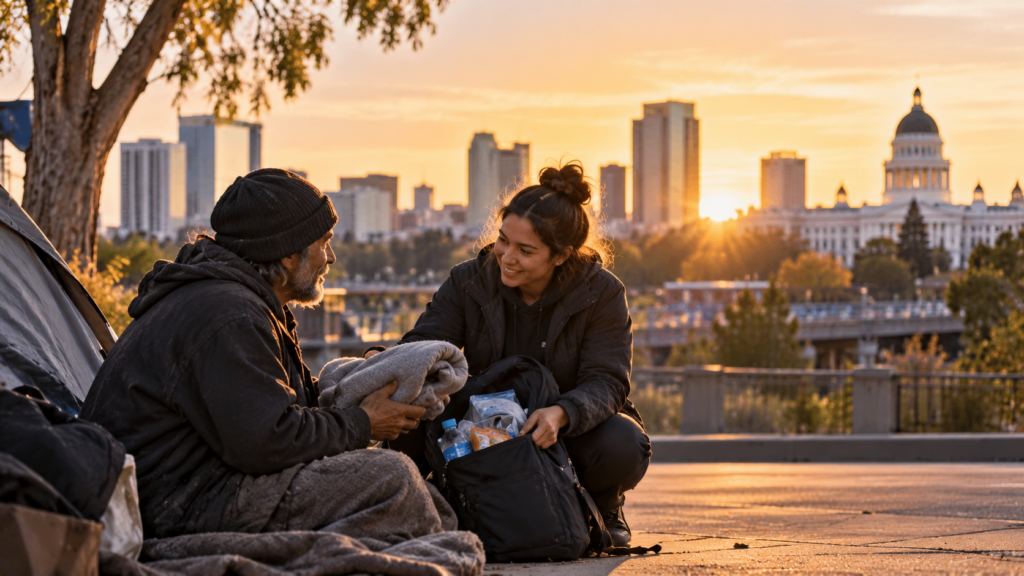
Sometimes that starts with something as simple as a backpack. A clean pair of socks, a warm blanket, hygiene supplies, or a meal might seem small compared to the scale of the homelessness crisis, but those things matter to someone who needs them. And when outreach is combined with housing navigation, healthcare, employment assistance, and other services, it becomes part of a much larger effort to help people regain stability.
I also think it’s important that we continue looking closely at outcomes, rather than focusing exclusively on how many people a program serves. We need to understand which approaches are working, where people are falling through the cracks, and how limited resources can be used more effectively. Serving thousands of people is meaningful, but understanding what happens after they receive services is just as important.
There’s still a long road ahead for Sacramento, and I don’t think anyone working in this field would suggest otherwise. But progress is possible when organizations work together, remain accountable, and keep the focus where it belongs: on the people we’re trying to serve. That’s the kind of community effort I want Packs for Cold Backs to continue being part of.
Sources & Further Reading
Sacramento County — August 26, 2026 Homeless Services: Progress, Challenges, and the Work Ahead Read the original Sacramento County report