
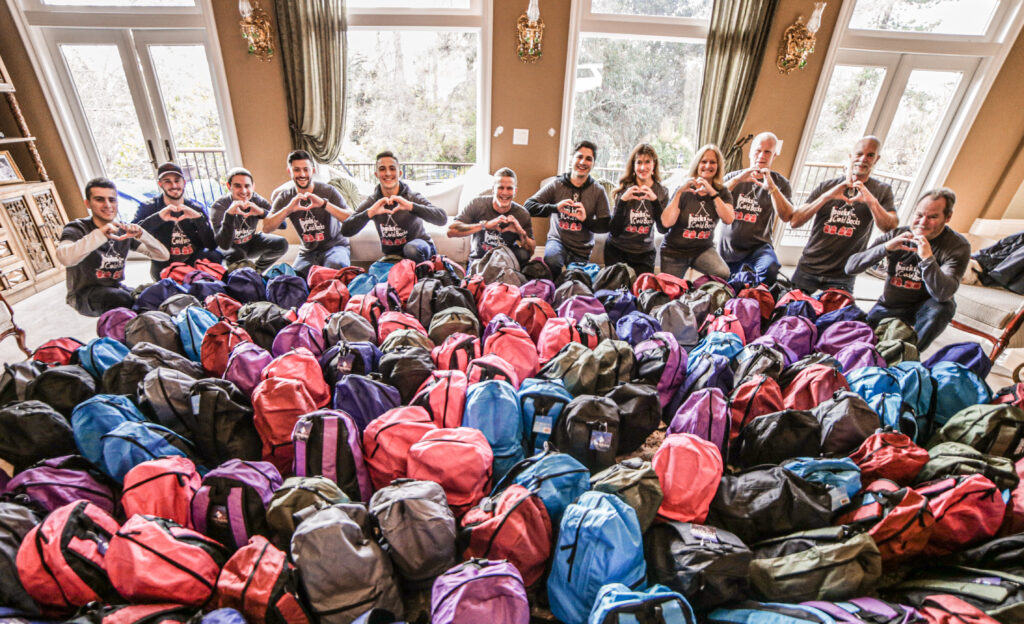
In 2011, a few friends and I decided to spend Christmas Day handing out backpacks and supplies to people experiencing homelessness in Sacramento. There were about four of us, and we really didn’t have much of a plan beyond wanting to help people who were going through a difficult time.
I certainly wasn’t thinking about starting a nonprofit or eventually managing volunteers across multiple states. At that point, we were just a group of friends who saw something happening in our community and wanted to do something about it.
What started as an annual Christmas Day tradition eventually became Packs for Cold Backs, an organization that has coordinated more than 150 volunteers across California, Washington, and Arizona. We officially established ourselves as a 501(c)(3) nonprofit in 2016, expanded our outreach from annual events to monthly operations, developed new programs, and built relationships with other organizations doing similar work.
It’s been nearly 15 years since we started, and I can confidently say that I’ve learned more about leadership, people, and managing an organization through this experience than I ever could have anticipated. A lot of those lessons came from making mistakes, figuring out what worked, and constantly trying to improve how we do things.
As the founder and executive director, I’ve had my hands in just about everything: outreach, fundraising, volunteer recruitment, event coordination, logistics, program development, and the countless smaller details that go into keeping an organization running. Over time, I’ve come to realize that one of the most important parts of building a successful nonprofit is understanding how to manage and develop the people who choose to support it.
Recruiting Volunteers Is Only the Beginning
I’ve always believed that people are largely motivated by some combination of passion, purpose, and financial incentives. In a volunteer-based nonprofit, you obviously can’t rely on that last one. People are choosing to give you their time because they care about something, and I think that’s something nonprofit leaders need to take seriously. When someone signs up to volunteer, they’re trusting you to make good use of their time. They want to feel like they’ve contributed something meaningful, and they want to leave knowing that showing up made a difference. One of the biggest responsibilities we have as leaders is making that possible.
A lot of it comes down to preparation. You need to understand your work, establish processes that people can follow, and make things as straightforward as possible. If volunteers are spending their time trying to figure out where they’re supposed to be or what they’re supposed to do, that’s a failure on the organization’s part, not theirs. Over the years, we’ve spent a considerable amount of time refining our outreach procedures, organizing donation collection and assembly, and improving how we coordinate events. Some changes were relatively minor, while others required completely rethinking how we operated. But the objective has always been the same: make it easier for our volunteers to do good work and provide the best possible experience for the people we’re serving.
Of course, even the best procedures won’t work for everyone in exactly the same way. One example I often think about is a volunteer who genuinely wants to help people experiencing homelessness but doesn’t feel comfortable approaching someone on the street and starting a conversation. That’s understandable. Street outreach can be intimidating, especially if you’ve never done it before.
You have a couple of options as a leader. You can encourage that person to push through their discomfort and hope they figure it out, or you can take the time to understand what they need. Maybe they just need some coaching, or an opportunity to shadow someone more experienced. Sometimes that’s all it takes. Other times, you realize their strengths are better suited for something else entirely. They might be great at coordinating donations, managing supplies, organizing events, fundraising, or helping with administrative work. All of those things are essential to the success of our programs, even if they aren’t always as visible as direct outreach.
I’ve learned that you can’t approach volunteer management as though everyone has the same strengths, interests, or comfort levels. Part of being a good leader is figuring out where someone can contribute most effectively and helping them recognize the importance of that contribution.
Why the Volunteer Experience Matters So Much
Getting someone to volunteer for the first time is one challenge. Getting them to come back consistently is something entirely different. I think one of the biggest mistakes organizations can make is focusing so heavily on recruiting volunteers that they overlook the experience those volunteers are actually having.
You want people to believe in your mission and buy into what you’re trying to accomplish. But you also have to invest in them. For me, that means developing relationships with our volunteers, understanding their motivations, recognizing their strengths, and making sure they feel appreciated. It also means being willing to provide guidance and opportunities for growth when someone wants to take on more responsibility. I’ve seen firsthand how much of a difference that can make.
We have people who have been volunteering with Packs for more than ten years. Some started by attending an event or two and eventually became regular volunteers. Others brought friends, family members, and coworkers. Over time, many of those relationships developed into genuine friendships. It’s one of the things I’m most proud of about our organization. We’ve built a community of people who enjoy working together and care about the same things. And I think that sense of belonging is a major reason people continue coming back.
Not every volunteer needs to become a team leader or take on a larger role. Some people simply want to show up, help for a few hours, and know they made a difference. There’s absolutely nothing wrong with that. Whether someone is coordinating an entire event or handing out water bottles on a hot summer afternoon, I want them to understand why their contribution matters. If someone leaves an event feeling good about what they accomplished, the people they worked with, and the organization they supported, there’s a much better chance they’ll want to do it again.
Learning That I Couldn’t Do Everything Myself
When Packs first started, I tried to manage practically every part of the organization myself. I was involved in planning the events, coordinating supplies, recruiting volunteers, managing outreach, and making sure everything happened the way I thought it should. In some ways, that made sense early on. We were still learning, and a lot of our processes were things I’d personally developed through experience.
But as we grew, that approach became less and less practical. There’s only so much time in a day, and there are only so many things one person can effectively manage. When you’re trying to handle operations, fundraising, logistics, events, outreach, communications, volunteer management, and program development, something eventually suffers. It took me some time to realize that being involved in everything wasn’t necessarily making me a better leader. In some cases, it was actually limiting what the organization could accomplish.
I had to learn how to trust other people, delegate responsibilities, and become comfortable with the fact that someone might approach a task differently than I would. That was an important adjustment for me, but it made a tremendous difference.
I’ve also been incredibly fortunate to have Kevin, our co-founder, alongside me throughout this process. Kevin and I complement each other really well. We have different strengths, and we’ve learned to recognize where one of us might be better suited to handle something than the other. I genuinely don’t think Packs would be where it is today without that partnership. The same lesson applies to the rest of our leadership team. You need people you can trust, but you also need to give them the opportunity to develop their own abilities and take ownership of their work. The more we invested in developing other leaders, the more capable our organization became.
Building Volunteer Teams Across Three States
Expanding Packs beyond Sacramento was an exciting opportunity, but it also introduced challenges we hadn’t dealt with before. It’s one thing to coordinate an event in a community where you’re familiar with the area, the people, and the available resources. Trying to establish those same operations in another state is a different situation entirely. We started by reaching out to people within our existing networks who had experience working with vulnerable populations or had demonstrated a genuine passion for helping others.
In Seattle, that person was Ashley Whipple. Ashley had previously volunteered with us in Sacramento before moving to Washington. She also had extensive experience working with foster youth, people experiencing housing insecurity, and survivors of sexual abuse. We stayed connected after she moved, and eventually started discussing the possibility of establishing Packs operations in Seattle.
I knew she had the experience and personality to be an effective leader. She was comfortable communicating with people, leading conversations, and working directly with individuals experiencing homelessness. We started with one-on-one training, going through our established procedures and discussing how we could adapt our operations to Seattle. As she became more comfortable with the responsibilities, we continued building the team around her.
Our expansion into Arizona happened somewhat differently. When I moved there for work in 2018, I began identifying people from my professional network who I thought would be a good fit. Two of those individuals were Justin and Patty. I’d seen their work ethic and how they interacted with people, and I felt those qualities would translate well into what we were trying to accomplish. We began working together, developing their knowledge of our programs, and gradually expanding our volunteer network through people they knew.
One of the things that helped us expand was having a solid operational foundation already established in California. By that point, we’d spent years figuring out how to organize events, conduct outreach, train volunteers, and coordinate supplies. We had processes that worked, and I didn’t see any reason to start from scratch just because we were operating somewhere new.
During the early stages of expansion, Kevin or I would travel to those locations to help with events, train volunteers, and ensure that our standards were being maintained. That created its own logistical challenges, but it was important to establish a strong foundation before expecting local leaders to manage everything independently. We also relied heavily on communication. Weekly Zoom meetings, leadership check-ins, and ongoing training helped us stay connected and address challenges as they came up.
At the same time, we had to be flexible. Seattle is very different from Sacramento, and Arizona presents an entirely different set of conditions. Climate, community needs, available resources, and even the way people interact can vary significantly. Our goal was never to force every location to operate identically. It was to establish consistent standards while giving local leaders the flexibility to adapt our methods to their communities. I still believe that’s one of the most important parts of managing teams across different locations. You need consistency, but you also need to trust the people who understand what’s happening on the ground.
Managing Through COVID-19
Of all the challenges we’ve faced as an organization, the beginning of the COVID-19 pandemic was probably one of the most difficult. Like everyone else, we were trying to understand what was happening and how serious the situation might become. There was a tremendous amount of uncertainty, particularly around how the virus spread and what precautions were necessary.
For us, there was an additional concern. We were working directly with individuals experiencing homelessness, many of whom were medically vulnerable or had limited access to healthcare. We needed to protect the people we served, but we also had a responsibility to protect our volunteers. Initially, we decided to remove our general volunteer network from direct outreach and rely on a smaller group of leadership personnel while we developed a safer approach.
We consulted multiple medical professionals and physicians, implemented frequent testing, and established procedures for how we would conduct outreach moving forward. That meant rethinking practically everything about our operations, from how we interacted with people to how we distributed supplies. We also started incorporating additional resources into our outreach, including masks, hand sanitizer, and eventually assistance accessing vaccinations as they became available.
One thing that became clear fairly quickly was that the need for our services wasn’t going away. If anything, the situation was becoming more difficult for the people we were trying to help. Many organizations had reduced or suspended outreach, and people experiencing homelessness were facing additional challenges accessing food, water, sanitation, and other essential resources.
Because we operated with a relatively lean structure, we were able to make decisions and adapt quickly. Within approximately the first month, we’d developed procedures that allowed us to begin expanding our outreach again. We also increased our navigation services, helping connect people with available programs and resources.
One of the larger efforts we undertook involved supporting encampments where groups of individuals had decided to remain together during the pandemic. We helped establish safer living areas and coordinated weekly deliveries of food, water, and essential supplies to multiple encampments over an extended period. We also worked with other nonprofits to help provide handwashing stations and additional services.
Through our partnership with Loaves & Fishes, we helped distribute more than 12,000 bottles of water during the first summer, along with meals and other essential supplies. We also coordinated camping equipment, water purification systems, and access to medical assistance when needed. There were a lot of moving parts, and the situation continued changing as new information became available.
Looking back, I think one of the biggest reasons we were able to respond effectively was that we’d already spent years developing our leadership team, operational systems, and relationships with other organizations. We weren’t starting from zero when the pandemic began. We had people we trusted, established communication channels, and experience coordinating resources under challenging circumstances. We still had to change a tremendous amount about how we operated, but that foundation made it possible. That experience taught me a great deal about making difficult decisions, listening to people with expertise outside my own, and understanding when an organization needs to adapt quickly.
Creating Opportunities Beyond Our Original Programs
Another accomplishment I’m particularly proud of came during the 2020 election. We recognized that individuals experiencing homelessness often faced significant barriers to voting, especially when it came to having a reliable mailing address and being able to receive their ballots.
Our director of communications, Hannah, and I started looking into how we might be able to help. It was a complicated process. We consulted people with legal expertise, communicated with election officials, and worked through the requirements to ensure that what we were doing was appropriate and effective.
We developed an initiative to help people register, access an appropriate mailing address, receive their ballots, and navigate the voting process. One of the biggest challenges was figuring out how to reconnect with people after registration so they could actually receive their ballots. When you’re working with individuals who don’t have a permanent place to live, something that seems relatively straightforward can become a major logistical issue.
It required a lot of coordination and problem-solving, but we were able to develop an approach that helped people participate in the election. I’m proud of that initiative because it showed how much our organization had grown. We started by handing out backpacks and essential supplies. Years later, we had developed the relationships, experience, and operational capabilities to identify a completely different community need and figure out how to address it.
I think that’s an important part of nonprofit work. You should always be looking at what’s happening in the communities you serve and asking whether there’s something more you can do.
The Accomplishment I’m Most Proud Of
There are a lot of things I’m proud of when I look back at what we’ve accomplished through Packs, but one family in particular has always stood out to me. We had the opportunity to help a mother and her three children move from homelessness into housing. At the time, one of her children was still a baby, and the family was facing an incredibly difficult situation.
We worked with Sacramento Steps Forward and other community partners to help navigate the housing process and connect the family with available resources. Once housing was secured, we helped furnish their home, provided food, school supplies, and assisted with accessing benefits and additional services. We continued staying in touch afterward, too.
The family is still housed and doing well, and I’ve maintained a relationship with them over the years. That experience means a tremendous amount to me. I sometimes think about how we started in 2011, with four friends going out on Christmas Day and handing out a few backpacks. At that point, I never could have imagined we’d eventually be in a position to help a mother and her three children move into a home of their own and support them through that transition.
And it wasn’t something I accomplished on my own. It took volunteers, community partners, donations, planning, and people contributing in different ways. That’s something I always try to communicate to our volunteers. Someone who’s helping assemble supplies or coordinate donations might not get to see the family whose life they’re helping change. But their contribution is part of what makes that outcome possible. It’s why I believe so strongly in making sure every volunteer understands the importance of their role, regardless of what that role happens to be.
What I’ve Taken Away From Nearly 15 Years of Volunteer Leadership
When I think about everything we’ve learned since starting Packs for Cold Backs, a few things stand out. First, having good intentions isn’t enough. You need to develop systems, establish clear processes, and put people in positions where they can be successful.
Second, you have to recognize that every volunteer is different. People bring different experiences, strengths, personalities, and motivations. The better you understand those differences, the more effectively you can help them contribute. I’ve also learned that retention has a lot to do with the experience you’re providing. People want to feel appreciated, connected to the mission, and confident that the time they’re giving is making a difference.
And perhaps one of the biggest lessons for me personally has been learning to trust other people with responsibilities I once felt I needed to handle myself. Developing strong leaders, giving them room to grow, and building teams that complement one another has allowed us to accomplish far more than I ever could have managed alone.
The COVID-19 pandemic reinforced the importance of all those things. When circumstances change unexpectedly, having good people, reliable systems, and established relationships can make an enormous difference in how effectively an organization responds. But beyond all the operational lessons, I think what means the most to me is the community we’ve built.
We have volunteers who have been showing up for more than a decade. People who have become close friends, brought their families into the organization, and continued finding new ways to help. Watching people develop confidence, take on leadership roles, and become genuinely invested in the work has been one of the most rewarding parts of this entire experience.
I never imagined that something as simple as handing out backpacks on Christmas Day would eventually grow into what Packs for Cold Backs has become. We certainly haven’t figured everything out, and I don’t think we ever will. There’s always something to improve, another challenge to work through, or a better way to serve the people who depend on us. But I think that’s part of what makes this work meaningful.
You keep learning, you keep improving, and you surround yourself with people who care enough to keep showing up. At the end of the day, I believe most people want to make a positive difference in the world. Some just need a little guidance, encouragement, or an opportunity to figure out how. And if there’s one thing I’ve learned through all these years, it’s that helping people find that opportunity can lead to some pretty incredible things.
Ardy Akhzari is the Founder and Executive Director of Packs for Cold Backs, a volunteer-driven nonprofit organization established in 2011. Through outreach, community partnerships, and resource navigation, the organization supports individuals and families experiencing homelessness. Ardy has helped develop and coordinate a network of more than 150 volunteers across California, Washington, and Arizona.